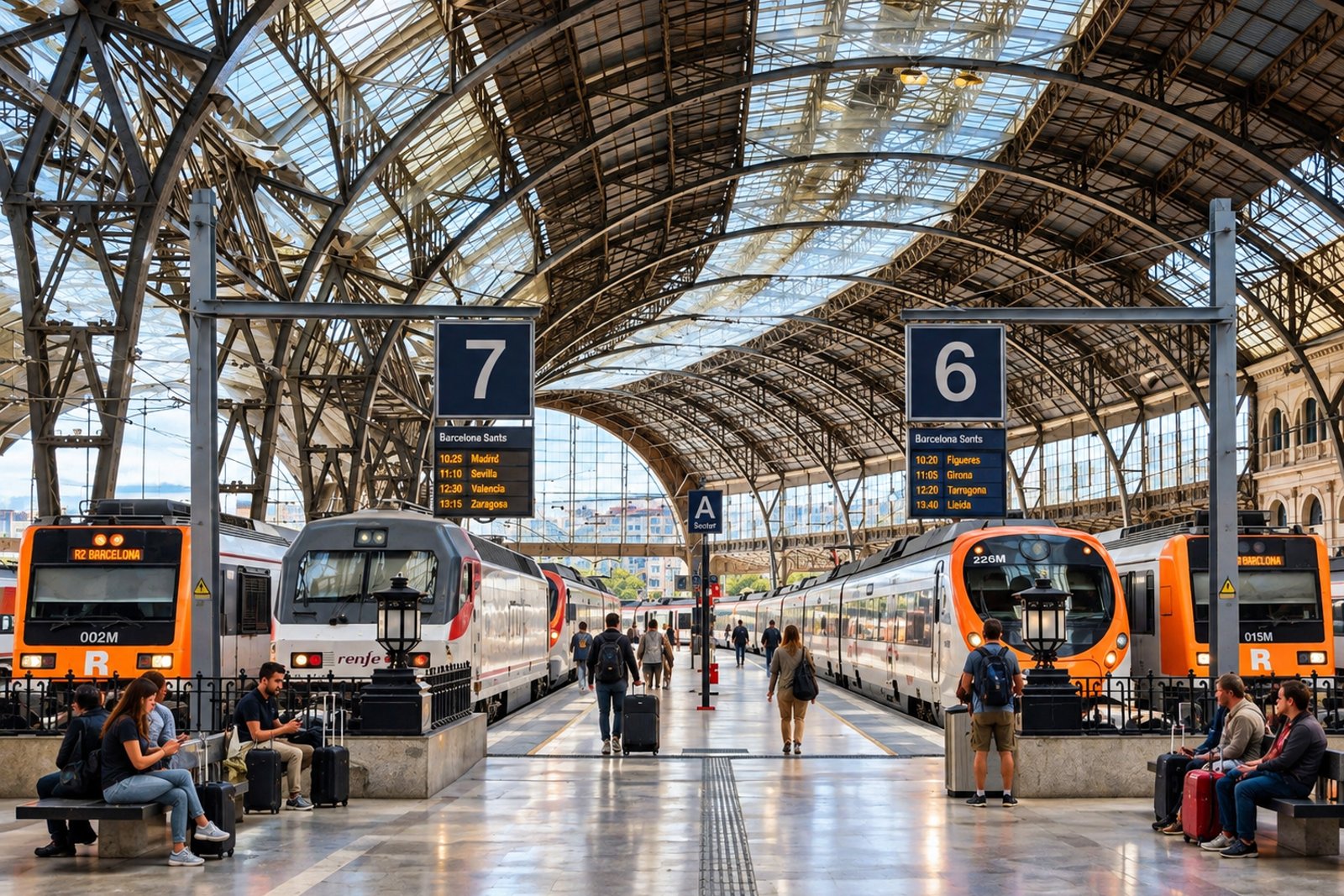
Spain's high-speed rail scene looks unified from the outside — Renfe AVE, Ouigo, iryo and Avlo all running the same routes, sometimes from the same platforms — but the ticketing behind it is genuinely fragmented. Knowing exactly where that fragmentation stops matters if your trip involves any kind of connection.
The short answer: no unified ticket across operators
There is no through-ticket that covers a journey spanning two different train companies. Book a Renfe AVE leg and an iryo leg for the same trip, and you're holding two completely separate tickets, bought and managed independently — if one is delayed, it has no bearing on the other, and a missed connection because of it is entirely on you to sort out. Third-party sites like Trainline let you search and compare across operators in one place, which helps with planning, but the tickets themselves remain distinct bookings, not an integrated itinerary.
The one exception: Combinado Cercanías
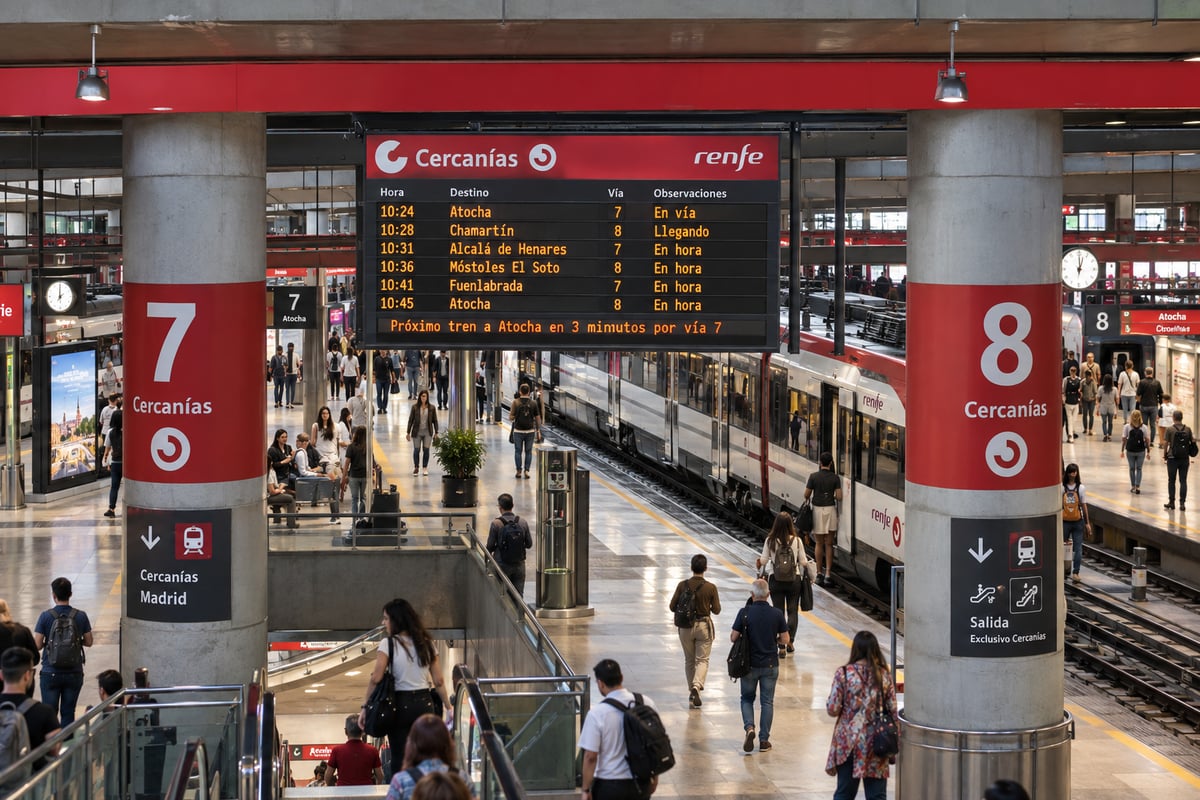
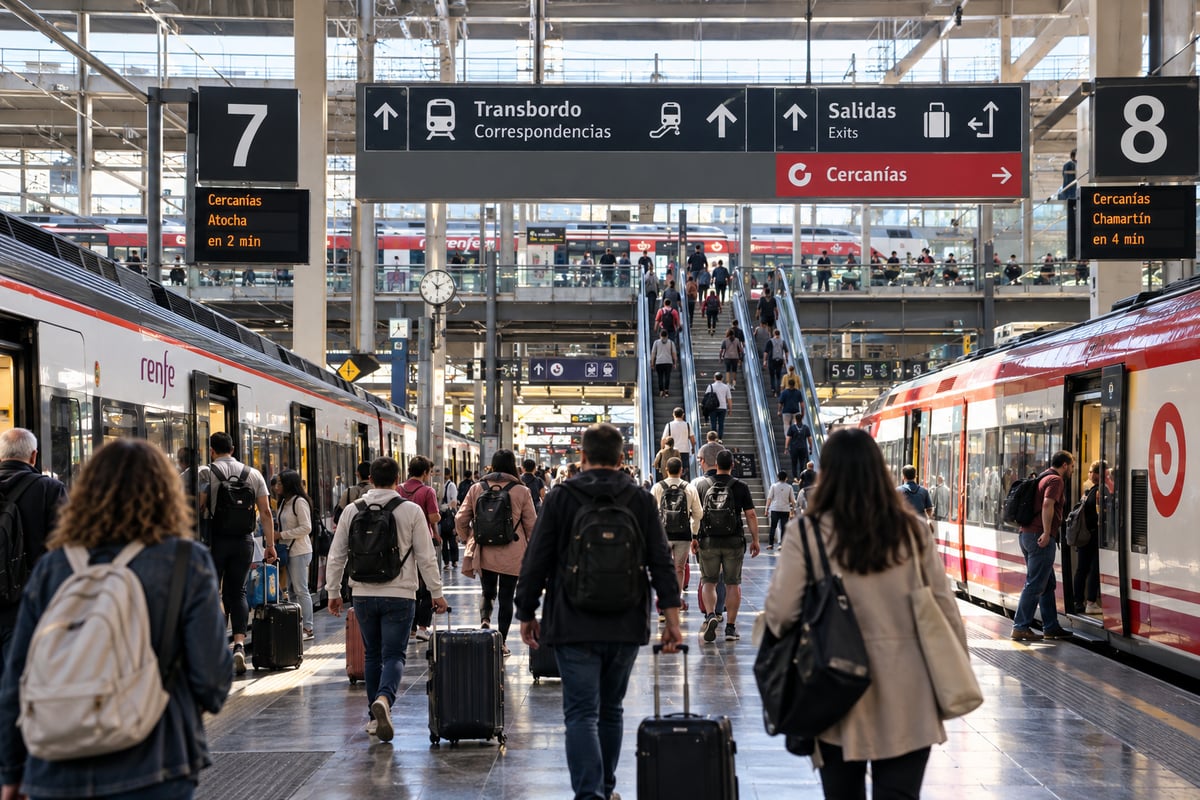
There's exactly one meaningful exception, and it's worth knowing about even if you never use another connection service in Spain: buying a Renfe long-distance ticket (AVE and similar) or an iryo ticket includes a free connecting Cercanías (suburban) ride at both ends of your journey — into the station before departure and onward from the station on arrival. It's valid roughly 3-4 hours around your long-distance train's departure and arrival times, within the designated urban zones of cities like Barcelona, Madrid and Valencia. You either scan your long-distance ticket's QR code directly at the Cercanías gate, or pick up a paper Cercanías ticket at the counter. This perk does not extend to Ouigo or Avlo tickets — buying from either of those low-cost operators means paying for your local connection separately.
What this means when you're planning connections
If your trip involves reaching a high-speed station via local Cercanías — say, getting from central Barcelona to Sants station, or connecting onward from Madrid Atocha to a Cercanías-served suburb — booking your long-distance leg on Renfe or iryo rather than Ouigo or Avlo can genuinely save you a small fare and a separate ticket purchase. It's a minor detail on its own, but it's the kind of thing worth checking before you default to whichever operator shows the cheapest headline fare, since the Cercanías perk can close some or all of that gap.
Metro and bus tickets follow their own separate logic
None of this through-ticket discussion touches Barcelona's own local transit — the T-casual metro/bus pass and a long-distance rail ticket are entirely unrelated systems with no crossover, Combinado Cercanías exception aside. Don't expect an AVE ticket to double as a metro ride once you're off the train (beyond the specific Cercanías perk above); budget for the T-casual or a Hola Barcelona pass separately for getting around the city itself once you've arrived.
Booking practically
When comparing operators for the same route, don't just compare the headline high-speed fare — factor in whether you'll need a Cercanías connection at either end and whether that's included. If you're connecting between two DIFFERENT long-distance operators for a multi-leg trip, build in real buffer time at the transfer station: since there's no shared ticket or coordinated schedule between them, a delay on the first leg is entirely your problem to manage on the second, not something either company owes you protection against.
Why the fragmentation exists
This isn't an oversight — it's the direct result of Spain opening its high-speed network to competition. Ouigo (a French SNCF subsidiary) and iryo (a joint venture including Italy's Trenitalia) both entered the Spanish market to compete directly with state-owned Renfe on the same high-speed lines, and Avlo is Renfe's own budget sub-brand competing with them. Genuine competition on price is the upside for travelers; separate ticketing with no cross-honoring is the downside, and it isn't likely to change while these companies are actively competing for the same passengers rather than cooperating on shared infrastructure.
The bottom line
Treat every operator switch in Spain as a hard boundary — separate ticket, separate risk, no shared responsibility for a missed connection — with the single exception of the free Cercanías perk that comes bundled with Renfe and iryo long-distance tickets. That's the one place "through-ticket" logic actually applies here; everywhere else, plan each leg as its own booking.
FAQ
Can I use one ticket for both Renfe and Ouigo trains in Spain?
No — each operator requires its own separate ticket, even for connecting legs of the same overall trip. There's no unified through-ticket across competing companies.
What is Combinado Cercanías?
A free connecting suburban (Cercanías) train ride included with Renfe long-distance or iryo tickets, valid roughly 3-4 hours around your long-distance departure/arrival, within a city's designated urban zone.
Does Avlo include a free Cercanías connection?
No — the free Cercanías connection perk applies only to Renfe long-distance and iryo tickets, not to Avlo or Ouigo.
What happens if I miss a connection between two different Spanish train operators?
You're on your own — since there's no shared ticket or coordinated schedule between competing operators, a delay on one doesn't protect your booking on the other. Build in real buffer time at any transfer.
Can I book multiple Spanish train operators through one website?
Yes, sites like Trainline let you search and compare Renfe, Ouigo, iryo and Avlo together, but the tickets remain separate bookings, not an integrated itinerary.
Keep planning
Not sure how the slots fit together?
Pick your trip length and we'll route a real day-by-day plan around the timed entries.