Renting a Car in Spain: The Law vs the Rental Desk
Spanish law sets the real rules; the rental desk has its own separate playbook of upsells and holds — knowing which is which saves both money and hassle.
Two separate rulebooks govern a Spanish car rental: what the law actually requires, and what the rental desk will try to get you to agree to. They overlap in places, but conflating them costs travelers money and, occasionally, a legitimate insurance claim. Here's each one, kept clearly apart.
What the law actually says
Spain drives on the right. US drivers need their US license plus an International Driving Permit (IDP) — this one is a real legal requirement, not upsell material, and it's worth getting from AAA before you fly (about $20, ten minutes). The blood-alcohol limit is 0.05% (0.03% for novice drivers) — stricter than most US states. None of this is negotiable or desk-dependent; it's Spanish traffic law regardless of which company you rent from.
What the desk actually does
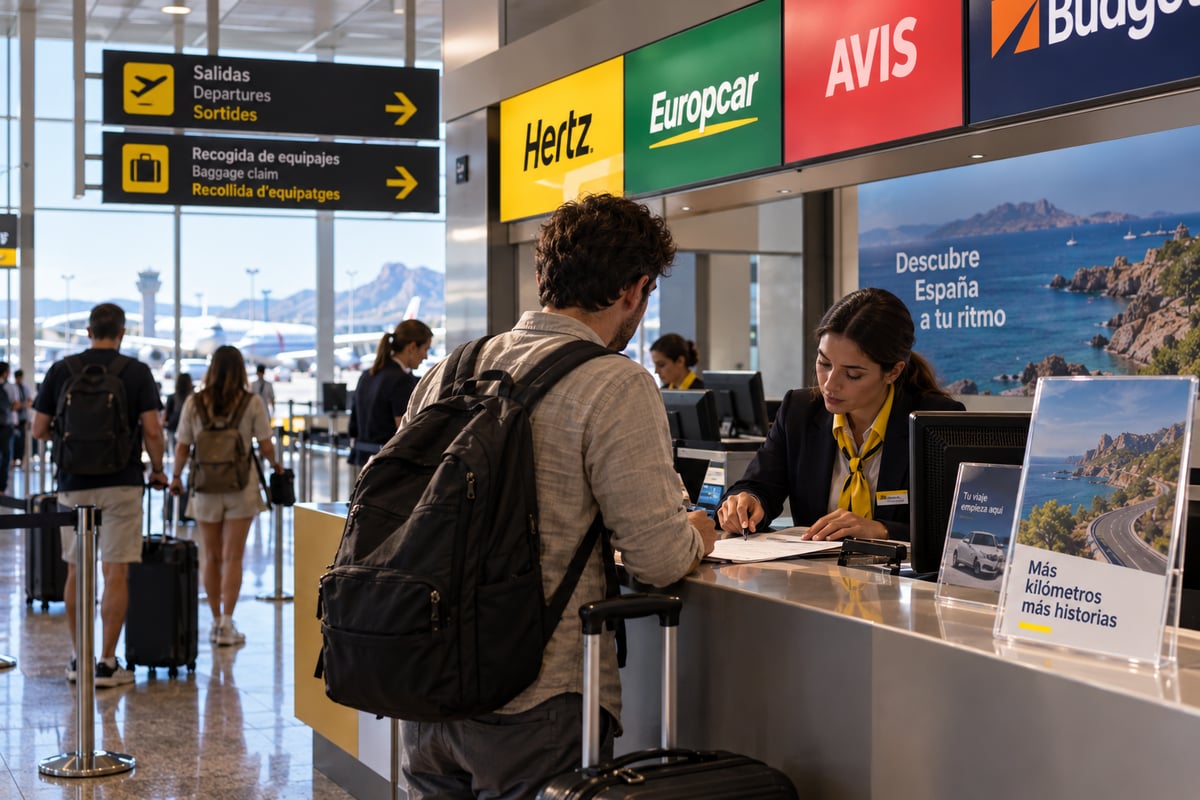
This is where a second, separate set of practices kicks in — none of it illegal, all of it worth knowing before you're standing at the counter tired from a flight.
The deposit hold
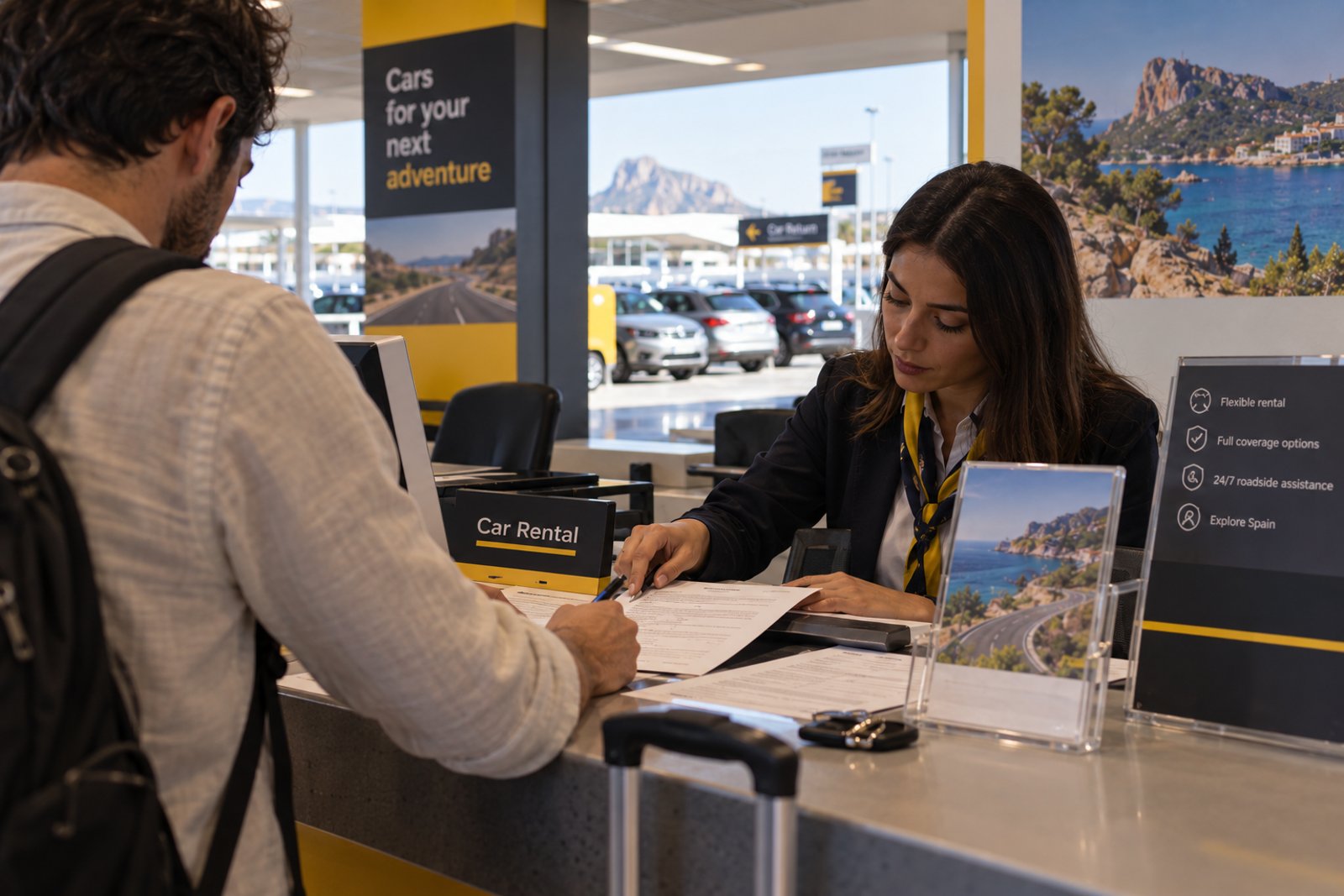
Expect a hold (not a charge) on a credit card sized to the vehicle's damage excess — this is standard, and a debit card is often refused outright for this purpose, so bring an actual credit card with enough headroom.
The insurance upsell
Desk staff routinely offer their own collision-damage-waiver product at a real markup over what a third-party excess-insurance policy — bought online before your trip — costs for equivalent coverage. Buying third-party cover in advance is usually the better value if you're comfortable filing a reimbursement claim after the fact rather than avoiding the excess hold entirely at the counter.
Fuel policy
Almost always full-to-full — you receive it full, you return it full, or you pay a penalty rate on whatever's missing. This is the fairest option when you're given a choice, so take it over prepaid-fuel alternatives.
Cross-border restrictions
If a France or Andorra day trip is even a possibility, ask explicitly — some Spain-based rentals restrict or surcharge crossing the border, and this is exactly the kind of detail that isn't obvious from the booking confirmation alone.
Where the two rulebooks actually intersect
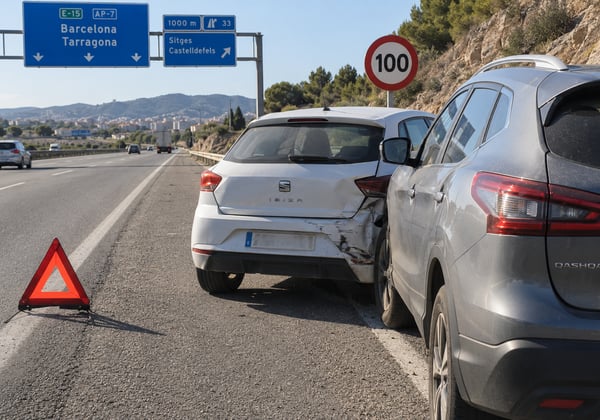
The one place law and desk practice genuinely collide: if you skip the IDP (a legal requirement) and something goes wrong, it's not just a traffic-law problem — it can also void the insurance coverage the desk sold you, since most policies (theirs and any third-party one) assume you were driving legally in the first place. The legal requirement and the insurance product aren't separate concerns; the first is a precondition for the second actually paying out.
What to check before you leave the counter
Before driving away, walk around the car with a staff member and note every existing scratch, dent or wheel scuff on the paperwork — photograph each one with a timestamp, not just a mental note. This protects you from being charged for pre-existing damage at return, which is a far more common dispute than anything related to an actual accident. It costs five extra minutes at pickup and it's the single best protection against a surprise charge on your card after you've already flown home.
Should you even rent a car for Barcelona
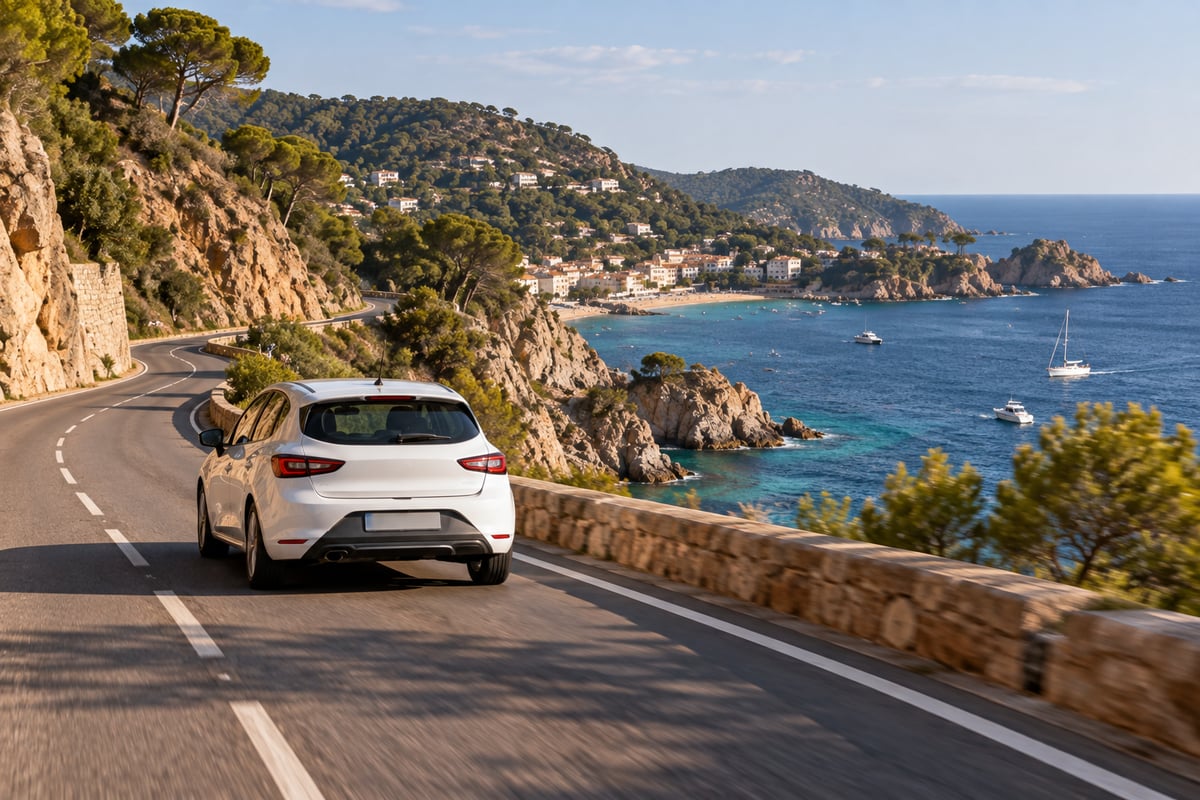
For the city itself, no — the low-emission zone (ZBE), scarce and expensive parking, and break-in risk make a car a genuine liability rather than a convenience. The right move is renting only for a specific day trip (Costa Brava is the classic case), picking the car up the morning you need it and dropping it off the same day or on departure, rather than holding a rental for your entire Barcelona stay.
The bottom line
The law's requirements (IDP, BAC limit, driving side) are fixed and identical everywhere. The desk's practices (deposit holds, insurance upsells, fuel policy, cross-border rules) vary by company and are worth navigating deliberately rather than accepting on autopilot. Handle both — legal paperwork before you fly, desk-practice awareness at the counter — and a Costa Brava day-trip rental is a smooth, uneventful part of the itinerary rather than a source of surprise costs.
FAQ
Do I legally need an International Driving Permit to rent a car in Spain?
Yes — it's legally required alongside your US license for driving in Spain, not just a rental-company preference. Get it from AAA before you fly.
Can I use a debit card for a car rental deposit in Spain?
Often not — many rental companies refuse debit cards for the deposit hold and require an actual credit card with enough available credit.
Should I buy the rental company's insurance or my own?
Third-party excess insurance bought before your trip is usually cheaper than the desk's own collision-damage-waiver product, if you're comfortable with a reimbursement-style claim process.
What fuel policy do Spanish car rentals use?
Almost always full-to-full — you receive and return the car with a full tank, or pay a penalty rate for any shortfall. Take this option over prepaid fuel if given a choice.
Should I rent a car for my whole Barcelona trip?
No — rent only for a specific day trip like the Costa Brava. Barcelona itself has a low-emission zone, expensive scarce parking, and real break-in risk that make a car a liability in the city.
Keep planning
Not sure how the slots fit together?
Pick your trip length and we'll route a real day-by-day plan around the timed entries.