Spanish law keeps a minimum of trains running even during a strike — here's the legal framework, your rights, and how to actually check before you travel.
A headline about a Spanish train strike can look alarming if you've got a trip booked around it, but the reality on the ground is usually much less dramatic than the news coverage suggests. Spain has a specific legal framework that keeps transport running even during labor action — knowing how it works turns a scary headline into a manageable planning detail.
Strikes happen, but they rarely stop everything
Rail strikes are a genuine, recurring feature of Spanish transport — Renfe, Ouigo and iryo have all seen labor action in recent years, and it's not something to assume won't happen during your trip. What it doesn't mean is a total shutdown. Spanish law requires operators to maintain minimum services even during a strike, so trains keep running at reduced frequency rather than stopping outright.
The law that keeps trains running: minimum services
Under the legal framework governing the right to strike in Spain (Royal Decree-Law 17/1977), the Ministry of Transport sets mandatory minimum service levels for any rail strike affecting essential travel — typically in the 50-75% range depending on the route and time of day. A recent AVE and long-distance strike, for example, ran at 73% capacity; Cercanías commuter trains are protected at 75% during peak hours, dropping to 50% off-peak. In practice, this means a strike thins the schedule and creates real disruption risk for a specific train, but it essentially never empties a route entirely.
Your rights if a strike hits your trip
If your specific train is among the cancelled ones, EU passenger-rights law is on your side regardless of where you bought the ticket: you're entitled to a full refund within 30 days, or you can rebook onto a different train at no extra cost. This applies whether you bought directly from the operator or through a reseller. The practical move if you suspect disruption is to check your specific booking's status rather than assuming — a scheduled strike doesn't automatically mean YOUR train is one of the cancelled ones.
How to actually check before you travel
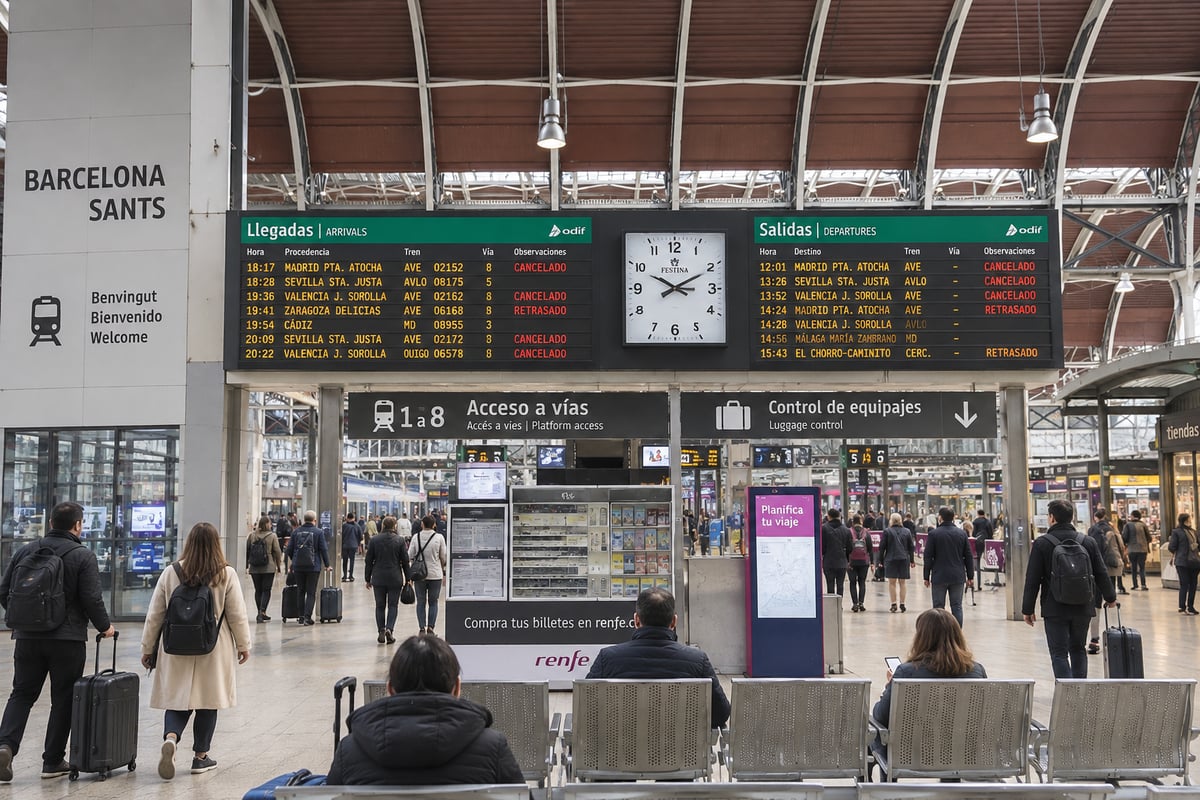
Skip the general news search and go straight to the source that actually matters for your ticket: the specific operator's own website or app. Renfe, Ouigo and iryo each post their own cancelled-service lists directly, and Renfe in particular contacts affected customers by email once a strike's minimum-service schedule is set. If you booked through a third-party site, the underlying operator's own channel is still the more current source — check there directly rather than relying on the platform you booked through to have the latest word.
A week or so before travel: a quick check of your operator's site for any announced strike dates costs nothing and catches the vast majority of disruptions with time to plan around them.
The day before or day of: if a strike is confirmed, check your SPECIFIC train's status rather than assuming the whole day is affected — minimum services mean plenty of trains still run.
If you're cancelled: request the refund or rebooking directly — it's a right, not a favor, and doesn't require justification.
If a strike lands mid-trip
The scenario that actually catches travelers off guard isn't a strike announced weeks ahead — it's one called with only a few days' notice while you're already in Spain. If that happens, the same rules apply: your specific train is either running (at reduced frequency, per the minimum-service schedule) or it's cancelled, and you find out which by checking your booking directly rather than guessing from the news. Build a little slack into any single-day itinerary that depends on hitting a specific train, especially around a departure day — a backup plan of "if this train's cancelled, the next one at X time still counts as minimum service" is usually all the contingency you actually need.
The bottom line
Spain's minimum-services law means a rail strike is an inconvenience to plan around, not a reason to avoid train travel altogether or panic when a headline mentions one. Check your specific operator's own channel close to your travel date, know that a full refund or free rebooking is yours if your train is cancelled, and treat the rest of your itinerary as unaffected until you have a specific reason to think otherwise.
FAQ
Do trains stop completely during a strike in Spain?
No — Spanish law requires minimum service levels (typically 50-75% of normal capacity) even during a rail strike, so service is reduced, not eliminated.
What are my rights if my train is cancelled due to a strike in Spain?
Under EU passenger-rights law, you're entitled to a full refund within 30 days or a free rebooking onto another train, regardless of where you purchased the ticket.
How do I check for train strikes in Spain before I travel?
Check your specific operator's own website or app (Renfe, Ouigo, or iryo) directly rather than relying on general news — each posts its own cancelled-service list once a strike's minimum-service schedule is set.
Are Cercanías commuter trains affected by strikes too?
Yes, though they're more protected than long-distance trains — typically 75% minimum service in peak hours, dropping to 50% off-peak.
Should I avoid a trip to Spain because of a scheduled strike?
Not necessarily — minimum services mean most trains still run. Check your specific booking's status closer to the date rather than cancelling plans over a general strike announcement.
Keep planning
Not sure how the slots fit together?
Pick your trip length and we'll route a real day-by-day plan around the timed entries.