Getting sick or hurt on vacation is disorienting enough without also having to figure out a foreign healthcare system on the fly. Barcelona actually makes this easier than most cities once you know the shape of it: a pharmacy on nearly every corner, a 24-hour rotation that never leaves a neighborhood uncovered, and a clear enough line between "see a pharmacist" and "go to the ER" that you can make the right call fast.
Farmacia first: the green cross system
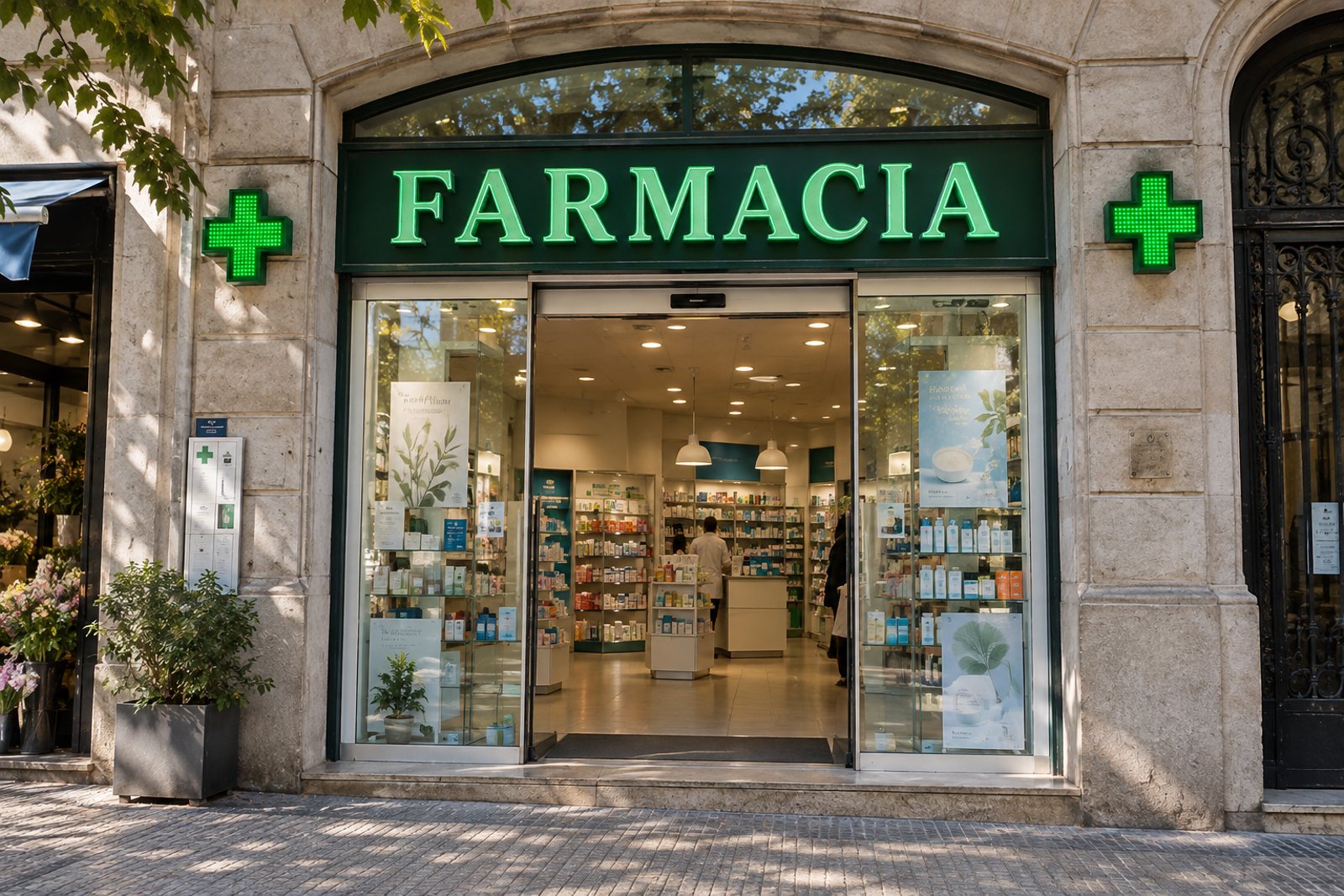
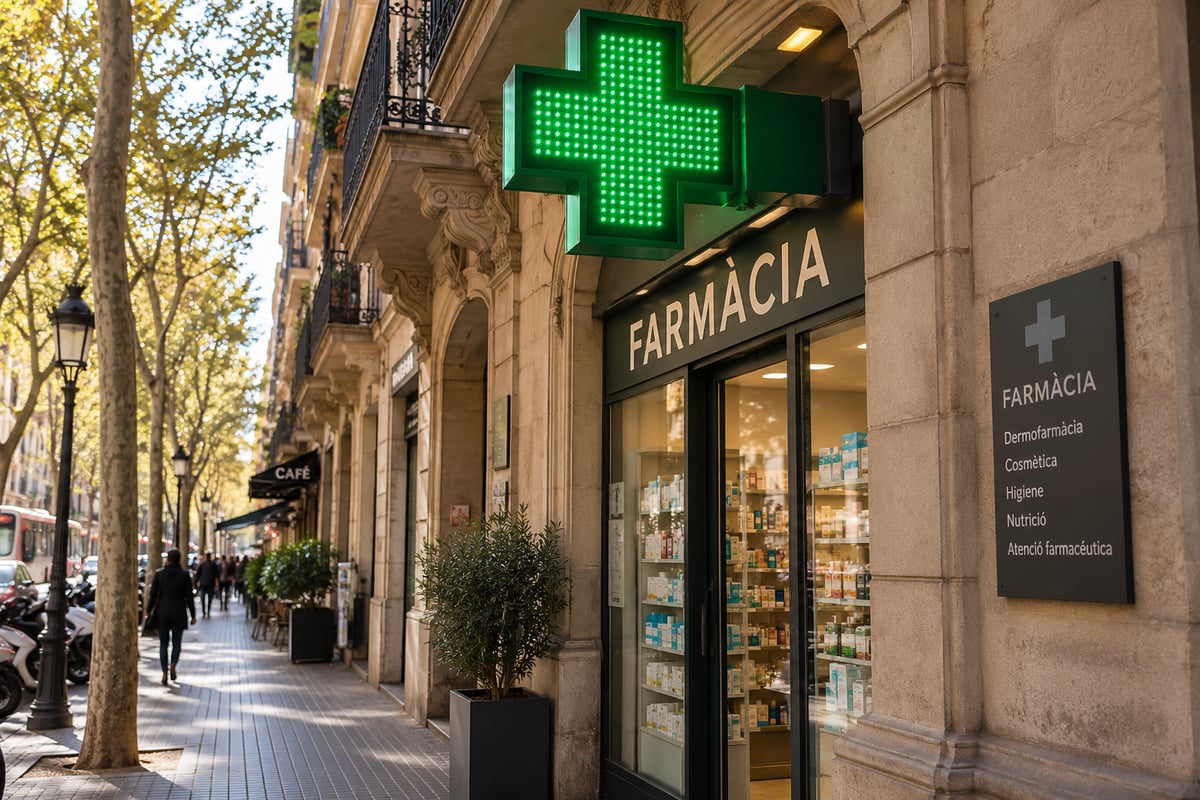
Look for the illuminated green cross — pharmacies (farmacias) are everywhere, even in small residential neighborhoods, and they're the right first stop for almost anything minor. Spanish pharmacists are trained to assess and treat minor ailments directly at the counter: a cold, a mild rash, a stomach bug, a minor cut. Describe your symptoms rather than asking for a US brand name — brand names generally don't exist in Spain, and the pharmacist will recommend the local equivalent by active ingredient.
What's different from a US pharmacy
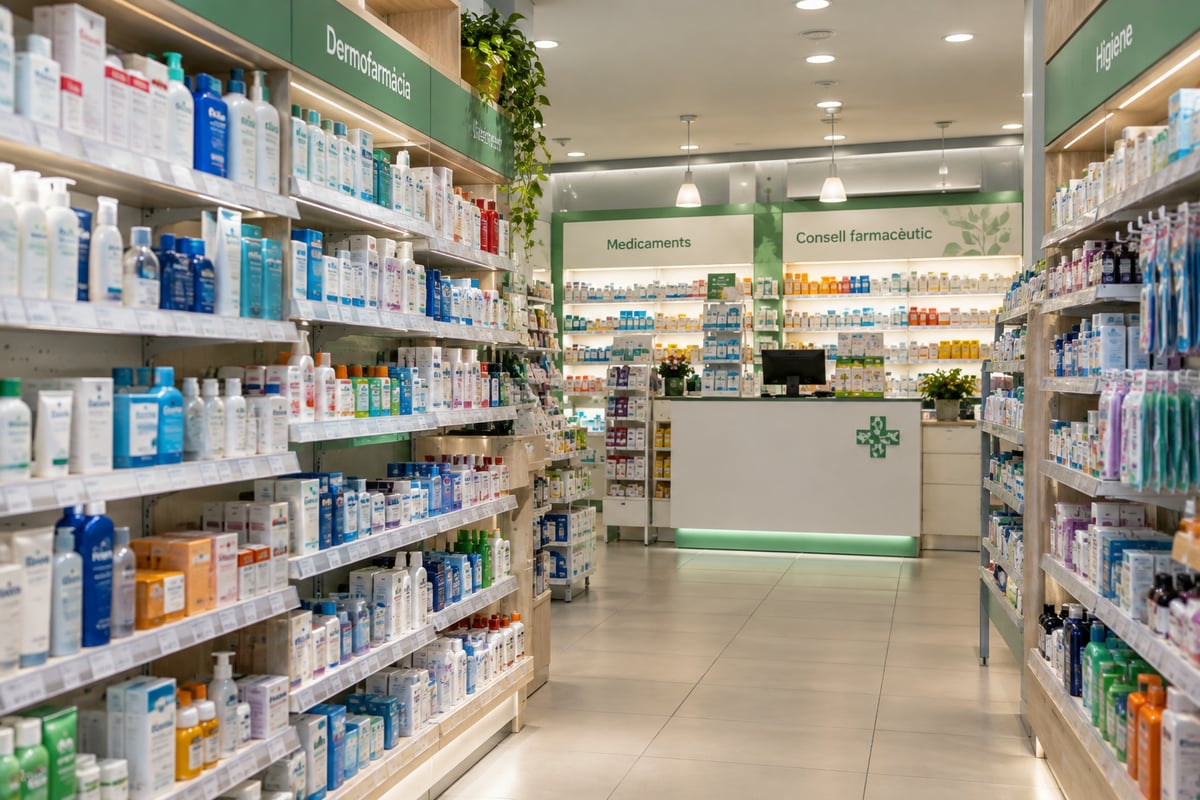
Nearly all medicines are sold only in pharmacies, never supermarkets. Some things are more accessible here than at home — emergency contraception is sold over the counter, for instance — while others that are casual purchases in the US (stronger painkillers, some antibiotics) need a Spanish prescription. When in doubt, just ask; the pharmacist will tell you plainly whether something needs a doctor.
Farmàcia de guàrdia: the 24-hour rotation
Pharmacies close at normal shop hours, but a rotating duty system keeps at least one pharmacy open per zone every night, Sunday, and holiday — this is the farmàcia de guàrdia. Every closed pharmacy posts the address of the current on-duty one right in its window, so if you're standing in front of a locked pharmacy at 11pm, look at the door before you panic; the answer is usually taped to the glass. It's worth noting the current online look-up tools for this rotation change occasionally, so trust the posted notice on the door over an old bookmark.
Private clinic vs public ER: which one, and when
For anything that needs more than a pharmacist but isn't a true emergency, a private walk-in clinic is usually your best move — same-day appointments, English more likely, and an itemized invoice you can submit to your own travel insurer rather than the slower public-system billing path. Public hospital urgencias (the ER) exists for genuine emergencies: chest pain, difficulty breathing, major trauma, anything that can't wait. Calling 112 gets you an ambulance and English-speaking operators for anything serious.
How the public ER actually works
Public urgencias will treat anyone who walks in, regardless of nationality or insurance status — emergency care can't legally be refused, and no one asks for a card at the door. Where it changes for an American tourist is afterward: since the US has no reciprocal healthcare arrangement with Spain, you'll be billed for care once it's past the point of immediate emergency stabilization. That's the entire case for travel insurance in one sentence — you'll be treated either way, but only insurance keeps the bill from becoming a real financial event.
What's OTC here that isn't at home (and vice versa)
Nearly everything medicinal in Spain is sold only in pharmacies — never a supermarket or convenience-store shelf — which surprises Americans used to grabbing painkillers at checkout. Within that, the boundaries shift in both directions from what you're used to: emergency contraception is available over the counter to adults, no prescription needed, which is more permissive than many US states. Meanwhile some things that are casual purchases at home — stronger antibiotics, certain codeine-containing products — need a Spanish doctor's prescription here, even if you'd normally get them without one in the US. The safest approach is to describe your symptom or need to the pharmacist rather than asking for a specific product; they'll tell you immediately whether it's something they can hand over or something that needs a clinic visit first.
The decision, simplified
Minor and manageable (cold, mild rash, small cut, travel diarrhea) → the pharmacy, first stop, no appointment needed.
Needs a doctor but isn't urgent (infection needing antibiotics, a wound that needs stitches, ongoing symptoms) → a private clinic, for speed and easier billing.
A true emergency (chest pain, severe injury, difficulty breathing) → 112 or straight to the public ER, no hesitation.
Keep any paperwork from every stop — receipts, a written diagnosis, prescriptions — in case you need to file an insurance claim once you're home. It takes thirty seconds to ask for it on the way out, and it's the difference between an easy reimbursement and a frustrating one.
FAQ
How do I find an open pharmacy at night in Barcelona?
Every closed pharmacy posts the address of the current on-duty ("farmàcia de guàrdia") pharmacy for that zone in its window — a 24-hour rotation guarantees at least one is open nearby at any time.
Can a Barcelona pharmacist treat me directly?
Yes, for minor ailments — colds, mild rashes, small cuts, digestive issues. Spanish pharmacists are trained to assess and recommend treatment at the counter without a doctor visit.
Should I go to a private clinic or the public ER in Barcelona?
A private clinic for anything that needs a doctor but isn't urgent — faster, more likely English-speaking, and you get an itemized invoice to submit to your own insurer. The public ER (or 112) is for true emergencies only.
Will a Barcelona hospital treat me without insurance?
Yes — public emergency departments treat anyone regardless of insurance or nationality and can't legally refuse emergency care. You will, however, be billed afterward as a non-EU visitor.
What's the emergency number in Barcelona?
112 — it works EU-wide, connects you to police, ambulance or fire, and has English-speaking operators.
Keep planning
Not sure how the slots fit together?
Pick your trip length and we'll route a real day-by-day plan around the timed entries.