"Visit in shoulder season" is close to universal travel advice for Barcelona, and for good reason — but advice that just says "go in May or October" skips the actual tradeoffs. Shoulder season isn't strictly better than summer, it's a different set of compromises, and knowing what you're actually trading helps you pick the right shoulder month for what you want out of the trip.
What shoulder season actually means here
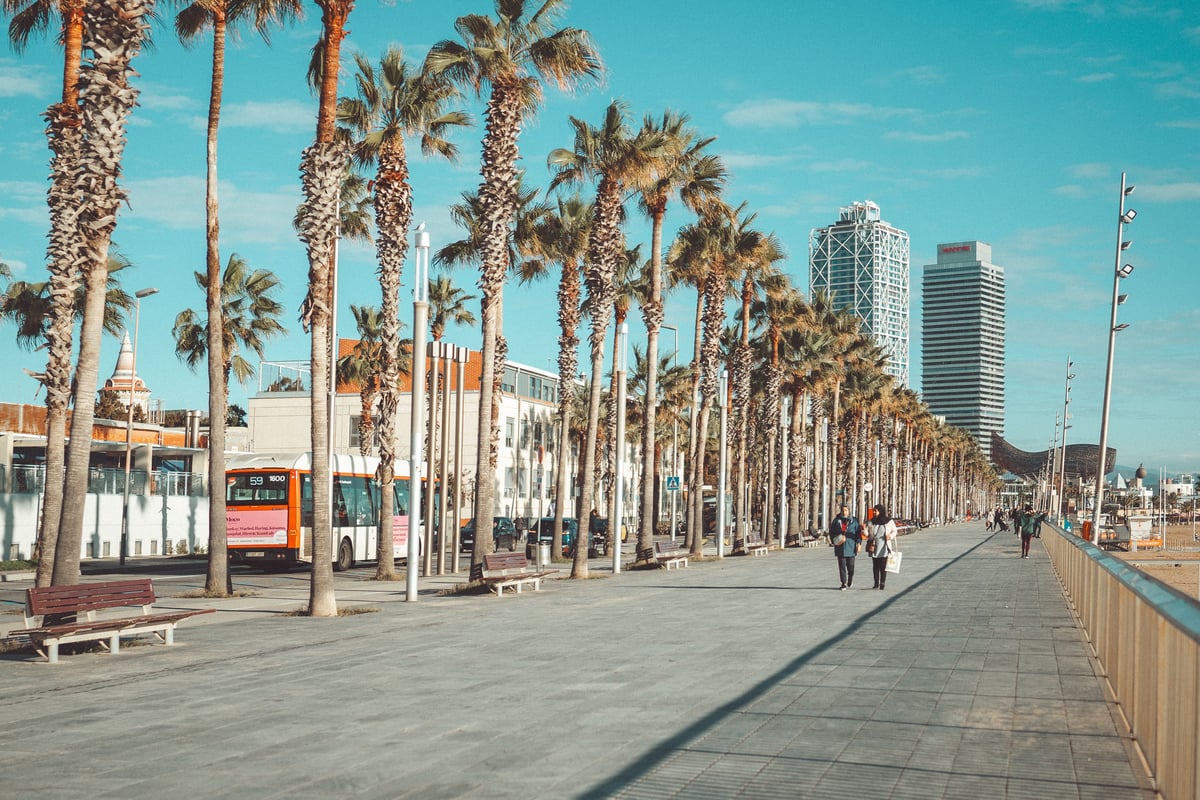
In Barcelona, shoulder season is May, June, September and October — not coincidentally, also the unanimous answer to "best time to visit." These four months sit between the mild, quiet winter and the hot, crowded peak of July-August, and they're where the city's climate, crowd levels and hotel rates all land in their most favorable overlap. Spring runs 55-72°F and feels ideal; fall runs 65-80°F with the sea still swimmable into October. Both bracket the sweatier, more crowded summer stretch without falling into winter's quiet-but-cooler 45-60°F range.
May/June vs. September/October
The two shoulder windows aren't identical, and the difference matters depending on what you're optimizing for. May and June trade a slightly cooler sea and a small bump in rain risk (short bursts, not all-day washouts) for the lowest crowd levels of the four shoulder months — you're arriving before the summer wave fully builds. September and October trade a bit less daylight for the warmest water of the shoulder window and the tail end of summer's energy — restaurants and beach clubs are still in full swing, just without the peak-August crush.
What gets quieter, and what doesn't
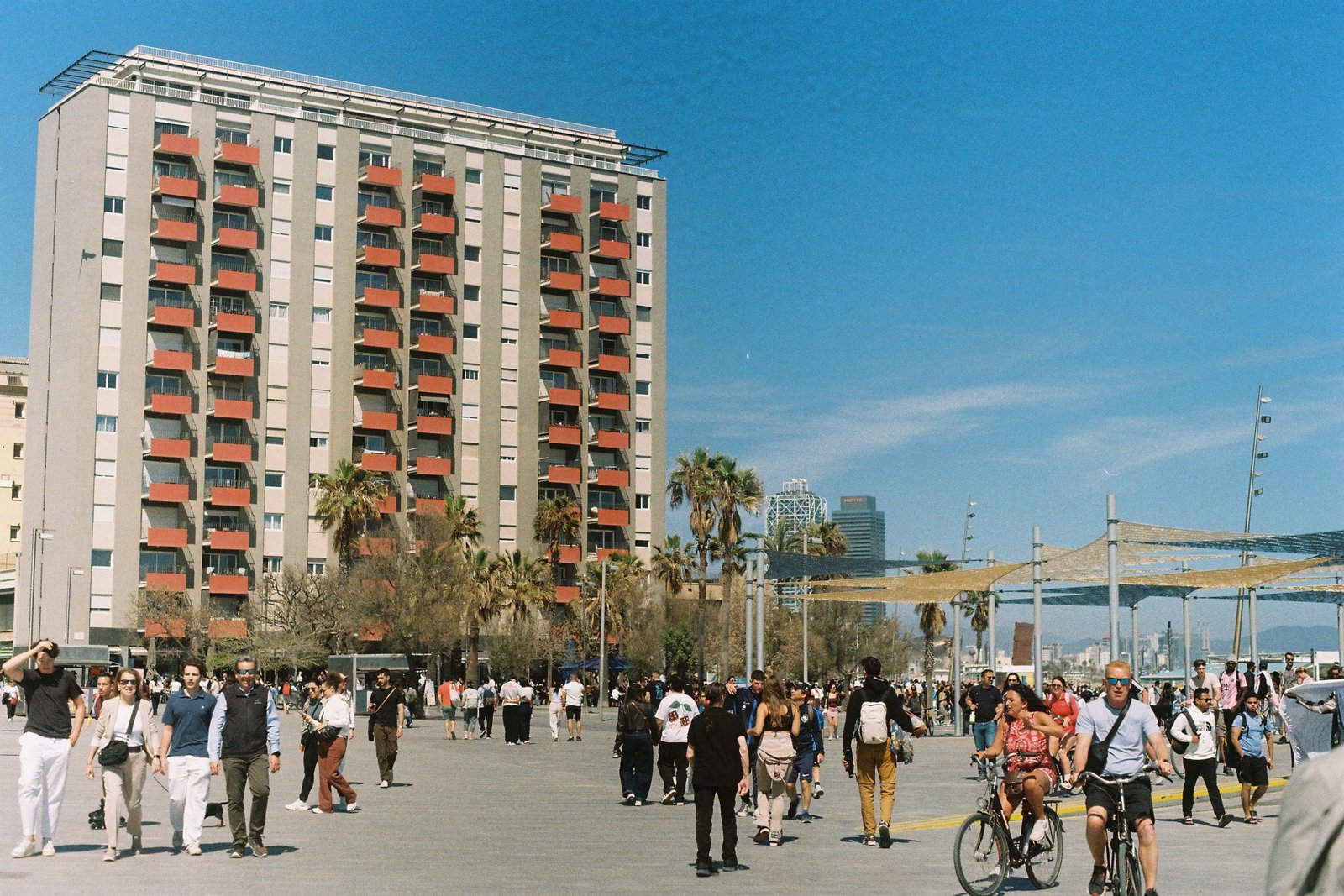
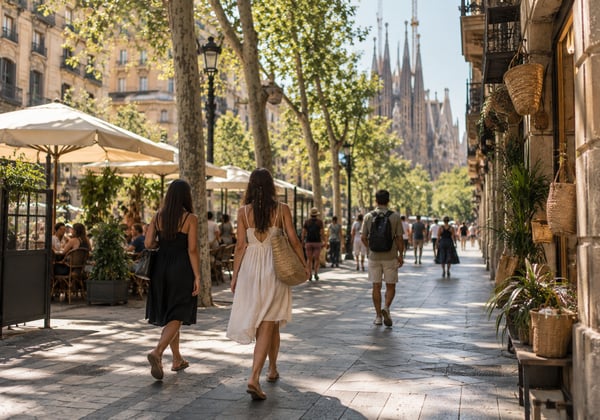
Hotel rates in shoulder season typically run below the July-August peak — how much depends entirely on the specific property and year, so treat any percentage you read as a rough guide rather than a number to plan a budget around, and check current rates directly rather than assuming last year's discount repeats. The big sights don't get meaningfully quieter — Sagrada Família, Park Güell and the other headline attractions run near-capacity on timed tickets essentially year-round now, shoulder season or not, so don't expect an empty Sagrada Família just because it's May. Where you'll genuinely feel the difference is in general foot traffic: less crowded metro cars, shorter waits for a table without a reservation, and streets that feel navigable rather than shoulder-to-shoulder.
What doesn't scale back
A handful of purely peak-summer offerings — certain beach-club style venues and some extended summer hours at attractions — do scale down or close outside the June-August stretch, so if a specific rooftop bar or late-night beach spot is central to your plan, double-check it operates in your shoulder month before building a day around it. Everything else — museums, restaurants, day trips, the core sightseeing circuit — runs on its normal, reliable schedule.
What's on the calendar in each window
Shoulder season isn't a dead calendar between festivals, either — May edges up against Sant Jordi's book-and-rose energy still lingering in the city's mood from late April, and late May into June brings Primavera Sound, one of Europe's premier music festivals, which fills hotels and raises prices in its own right regardless of the general shoulder-season discount. September carries La Mercè, the city's biggest annual festival, in its last week — spectacular, but exactly the kind of dated event that spikes both crowds and hotel rates within an otherwise calmer month. If you want shoulder season's calm without a festival colliding with your dates, June's first half and the first three weeks of September are the more reliably quiet stretches within an already-good four-month window.
The honest tradeoff
Shoulder season doesn't mean an empty city or rock-bottom prices — the major sights are still busy and rates are still real money, just meaningfully better than August on both counts. What you're actually trading peak summer for is a more comfortable version of the same trip: cooler, less crowded streets and transit, marginally better hotel value, and a slightly higher chance of a rainy afternoon in exchange. For most first-time visitors, that trade is worth making — just don't expect it to feel like a secret off-season discovery, because plenty of other travelers have made the same calculation.
FAQ
What are the shoulder season months in Barcelona?
May, June, September and October — the months between winter's quiet cool and summer's hot, crowded peak, and also the four months most commonly recommended as the best time to visit.
Is Barcelona less crowded in shoulder season?
General foot traffic and transit are noticeably calmer, but major timed-ticket attractions like Sagrada Família and Park Güell run near-capacity nearly year-round regardless of season.
Are hotels cheaper in Barcelona in shoulder season?
Typically yes, compared to the July-August peak — but the exact discount varies by property and year, so check current rates rather than assuming a fixed percentage.
Is the sea warm enough to swim in shoulder season?
Yes for September and October, when the sea is at its warmest after a full summer of heating; May and June are swimmable but noticeably cooler.
Should I visit in May/June or September/October?
May/June gives you the lowest crowds and a slightly higher rain-risk with cooler water; September/October gives you warmer water and lingering summer energy in exchange for a bit less daylight. Both are strong choices.
Keep planning
Not sure how the slots fit together?
Pick your trip length and we'll route a real day-by-day plan around the timed entries.