Gaudí gets the fame, but he was one figure in a whole movement — and some of Barcelona's most beautiful buildings were designed by his contemporaries and rivals. Catalan Modernisme produced a generation of brilliant architects whose work most tourists walk past without realizing what they're seeing. If Gaudí captivated you, exploring Modernisme beyond him is the rewarding next step — fewer crowds, lower prices, and some genuinely jaw-dropping interiors. This guide introduces the movement, the other masters, and where to see their best work.
Modernisme beyond Gaudí — the other masters
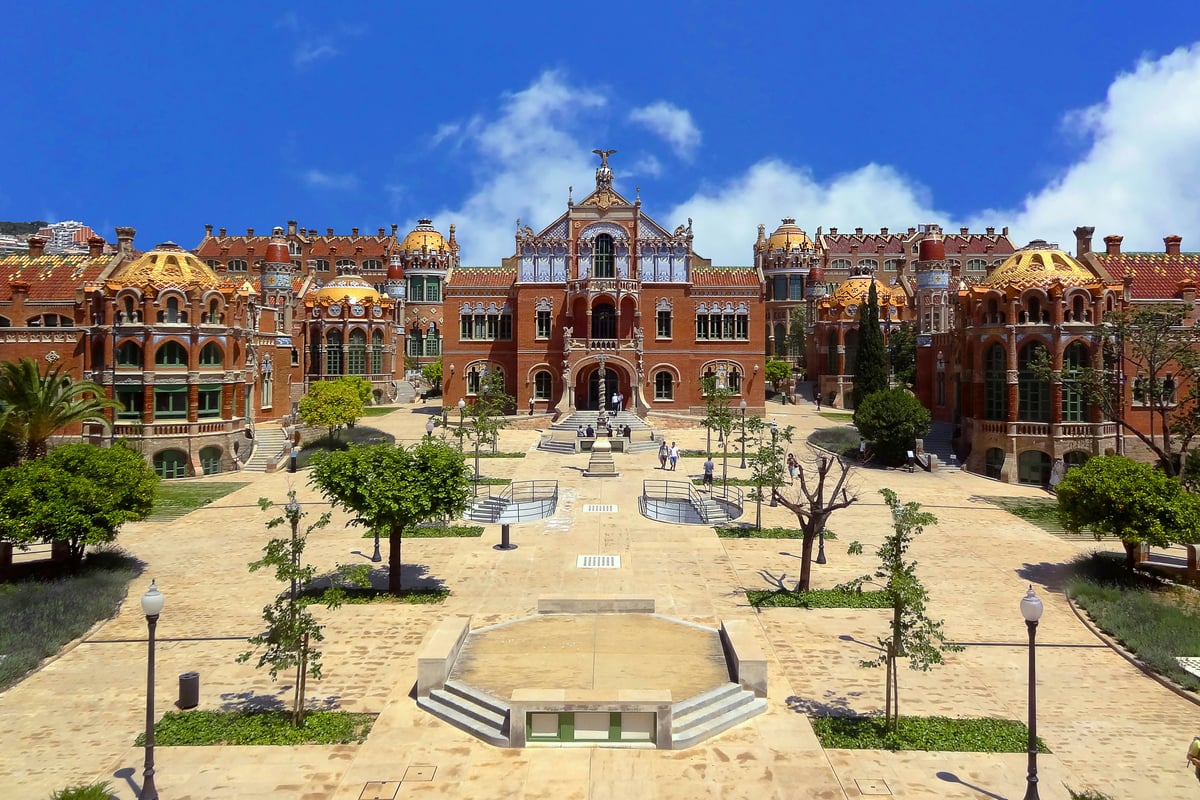
Hospital de Sant Pau — Domènech i Montaner — 10 min from Sagrada
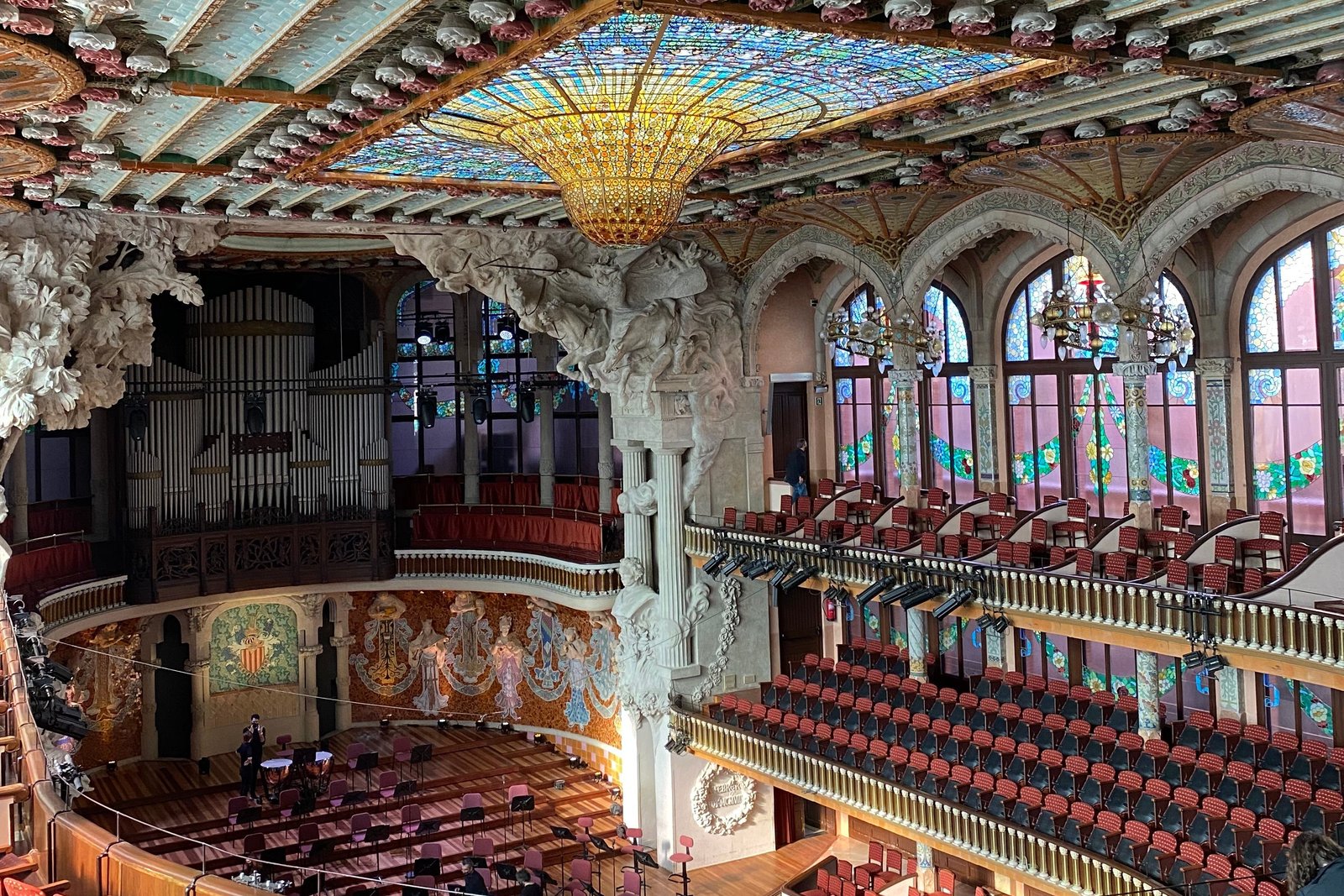
Palau de la Música — Modernisme in El Born
Casa Vicens — Gaudí's first house, in Gràcia
MNAC (National Museum) — Catalan art on Montjuïc
What Modernisme actually was
Modernisme was the Catalan branch of the Art Nouveau wave that swept Europe around 1880–1915 — but with a distinctly Catalan flavor, tied to a surge of regional pride and identity. Its hallmarks: organic, nature-inspired forms; rich ornamentation; stained glass, ceramics, wrought iron, and mosaic; and a fusion of architecture with the decorative arts and crafts. It coincided with the building boom of the Eixample, which is why so much of Barcelona is a Modernista showcase. Gaudí was its most radical genius, but two other architects stand nearly as tall.
Lluís Domènech i Montaner
Often considered Gaudí's greatest rival, Domènech i Montaner created arguably the two most beautiful Modernista interiors in the city:
Palau de la Música Catalana. A concert hall of breathtaking excess — an inverted stained-glass skylight dome that floods the auditorium with colored light, mosaic columns, and sculptural exuberance everywhere. A UNESCO site and, for many, the single most beautiful interior in Barcelona. Tour it by day or, better, attend a concert. Book ahead.
Hospital de Sant Pau. A vast complex of tiled Modernista pavilions near the Sagrada Família — a former hospital reborn as a cultural site, and one of the city's most underrated wonders. A UNESCO site that most visitors skip, to their loss.
Josep Puig i Cadafalch
The third great Modernista, Puig i Cadafalch brought a more Gothic-and-Flemish-influenced style:
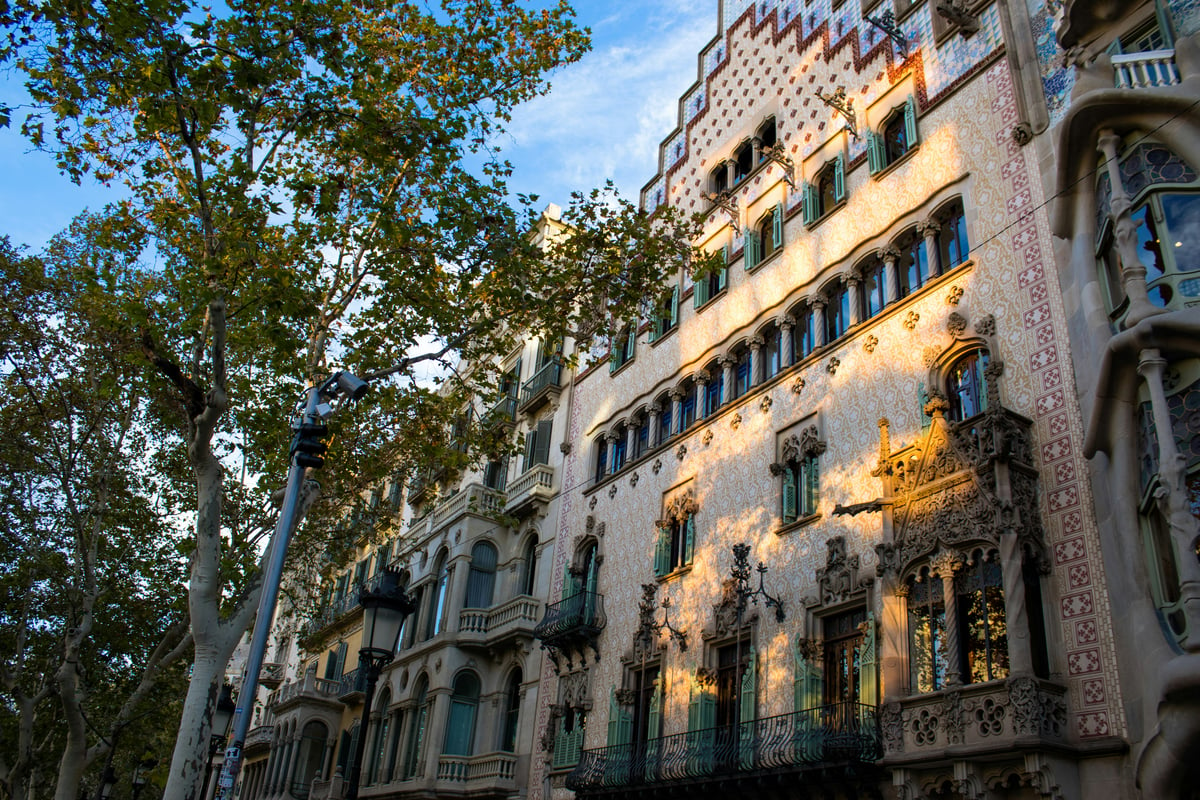
Casa Amatller. Right next to Casa Batlló on the "Block of Discord," with a stepped, Dutch-gable facade — a fascinating contrast to Gaudí's dragon house next door, and visitable.
Casa de les Punxes (Casa Terradas). A striking, castle-like building with pointed turrets that looks straight out of a fairy tale, on Avinguda Diagonal.
Palau del Baró de Quadras and other Eixample gems carry his ornate, medieval-inflected signature.
The Block of Discord
The single best place to grasp the movement is the "Illa de la Discòrdia" (Block of Discord) on Passeig de Gràcia — one city block where three of the great Modernista architects' buildings stand side by side, each utterly different: Gaudí's Casa Batlló, Domènech i Montaner's Casa Lleó Morera, and Puig i Cadafalch's Casa Amatller. The nickname comes from the jarring clash of styles competing for attention. Standing here, you see the whole movement's range in a single glance — and it's free to admire from the sidewalk.
How to explore Modernisme beyond Gaudí
Prioritize the Palau de la Música and Hospital de Sant Pau — these two Domènech masterpieces are the essential non-Gaudí Modernisme, and far less crowded than the Gaudí houses.
Walk the Eixample with your eyes up — the district is full of Modernista facades, ironwork balconies, and decorative details most people miss. Look above the shopfronts.
Visit the Block of Discord to compare the masters side by side.
Consider the Ruta del Modernisme — the city's official self-guided route links dozens of Modernista sites with a guidebook and discounts.
Attend a concert at the Palau if you can — experiencing that interior alive with music beats any daytime tour.
Why Modernisme happened here
Understanding why this explosion of creativity erupted in Barcelona specifically makes the buildings resonate more. The late 19th century was a moment of surging Catalan pride and prosperity — the Renaixença, a cultural reawakening that revived the Catalan language and identity, coincided with industrial wealth and the building of the Eixample. Modernisme became the architectural expression of that confidence: a deliberately Catalan style, drawing on the region's Gothic heritage and craft traditions while embracing new materials and ideas, asserting that Barcelona was a modern European capital with an identity distinct from the rest of Spain. The wealthy industrialists who commissioned these buildings were making statements — about their own status, yes, but also about Catalan creativity and ambition. That's why so many Modernista landmarks cluster in the Eixample, the new district where that newly rich, newly confident bourgeoisie built their showcase homes. Seeing Modernisme as the built expression of a people's cultural awakening — not just a pretty regional Art Nouveau — turns a museum-y architecture tour into a window onto Catalan identity itself, which still shapes the city you're visiting today.
Why it's worth your time
Beyond avoiding the Gaudí crowds, exploring wider Modernisme gives you a richer understanding of Barcelona itself — the movement was bound up with Catalan identity and the city's confident, creative turn of the century, and seeing it whole (not just its most famous practitioner) deepens everything. The Palau de la Música alone justifies a non-Gaudí Modernisme detour; add Sant Pau and the Block of Discord and you've experienced one of Europe's great architectural moments in full, not just its headline act.
FAQ
What is Modernisme?
The Catalan branch of Art Nouveau (around 1880–1915), marked by organic nature-inspired forms, rich ornamentation, stained glass, ceramics, and ironwork, tied to a surge of Catalan pride. Gaudí was its most radical figure, but not its only master.
Who are the other great Modernista architects besides Gaudí?
Lluís Domènech i Montaner (Palau de la Música Catalana, Hospital de Sant Pau) and Josep Puig i Cadafalch (Casa Amatller, Casa de les Punxes) are the two other giants of the movement.
What's the most beautiful non-Gaudí building in Barcelona?
For many, the Palau de la Música Catalana by Domènech i Montaner — its inverted stained-glass dome and lavish interior make it arguably the most beautiful room in the city. Hospital de Sant Pau is a close second.
What is the Block of Discord?
A single block on Passeig de Gràcia where buildings by Gaudí (Casa Batlló), Domènech i Montaner (Casa Lleó Morera), and Puig i Cadafalch (Casa Amatller) stand side by side in clashing styles — the best place to see the movement's range at a glance, free from the street.
Is non-Gaudí Modernisme worth visiting?
Very — the Palau de la Música and Hospital de Sant Pau are stunning and far less crowded than the Gaudí houses. Exploring the wider movement gives a richer understanding of Barcelona's turn-of-the-century creative golden age.