Spanish, Catalan & Culture Shock: A Primer for Americans
Barcelona is bilingual — Catalan matters. The language situation, useful phrases, the cultural norms that differ from the US, and how to be a respectful guest.
Barcelona will feel familiar to American visitors in many ways — it's a modern, cosmopolitan European city — but a handful of cultural and linguistic differences trip people up, and getting them right makes you a more welcome, more comfortable guest. The biggest surprise for most: this is a bilingual city where Catalan, not just Spanish, is central to local identity. This guide covers the language situation, the cultural norms, and the etiquette that helps you fit in.
The language situation: Catalan and Spanish
This is the thing most Americans don't expect: Barcelona is bilingual. Catalan (català) is the native language of Catalonia and a source of deep regional pride — it's not a dialect of Spanish but a distinct Romance language. Street signs, menus, and official life are often in Catalan; locals speak both Catalan and Spanish (Castilian) fluently and switch easily. What this means for you:
Spanish is universally understood — you don't need Catalan to get by; everyone speaks Spanish too.
But Catalan matters to identity — acknowledging it (even a "bon dia" for good morning) is warmly received.
Don't call Catalan a dialect or assume everything is "Spanish" — it's a sensitive point tied to Catalan identity.
English is widely spoken in tourist areas, restaurants, and by younger people — you'll manage fine in English, but effort in the local languages is appreciated.
A few useful words
You don't need fluency, but a handful of phrases go a long way. Catalan first, then Spanish:
Good afternoon/evening: "Bona tarda" (Cat) / "Buenas tardes" (Sp)
Please: "Si us plau" (Cat) / "Por favor" (Sp)
Thank you: "Gràcies" (Cat) / "Gracias" (Sp)
You're welcome: "De res" (Cat) / "De nada" (Sp)
Excuse me / sorry: "Perdó" (Cat) / "Perdón" (Sp)
The bill, please: "El compte, si us plau" (Cat) / "La cuenta, por favor" (Sp)
Do you speak English? "Parla anglès?" (Cat) / "¿Habla inglés?" (Sp)
Leading with a Catalan greeting then switching to Spanish or English is the friendliest approach — it shows respect for where you are.
Cultural norms that differ from the US
The late schedule. Lunch at 2pm, dinner at 9pm, nightlife starting near midnight — life runs later here (see our meal-times guide). Adjust your clock.
A slower, unhurried pace. Meals are lingered over, the bill won't come until you ask, and rushing is mildly rude. Relax into it.
Greetings. Two cheek kisses (left then right) are common socially between friends; a handshake is fine in formal/first-meeting settings. As a tourist, a friendly "hola" suffices.
Tipping is modest. No US-style percentages — round up or leave small change for good service (see our money/tipping guide).
Personal space and volume. Spaniards can be expressive and loud in conversation; it's warmth, not anger.
Dress. Locals dress neatly and stylishly; very casual US "tourist" attire (athleisure, flip-flops away from the beach) marks you out. Smart-casual blends in.
Quiet hours and respect for residents. Over-tourism is a real local tension; keeping noise down in residential areas and being a considerate guest matters more than ever.
The over-tourism context
It's worth knowing that Barcelona has a genuine, vocal tension around mass tourism — protests, the tourist-apartment crackdown, and local frustration with crowds and rising costs have made headlines. None of this means visitors aren't welcome; tourism is vital to the city. But it does mean being a thoughtful guest goes a long way: support local businesses, keep noise down in neighborhoods where people live, don't treat residential streets as a theme park, respect the Catalan culture you're visiting, and tread lightly. Travelers who engage respectfully are warmly received; the friction is with thoughtless mass tourism, not curious, considerate visitors.
Understanding Catalan identity
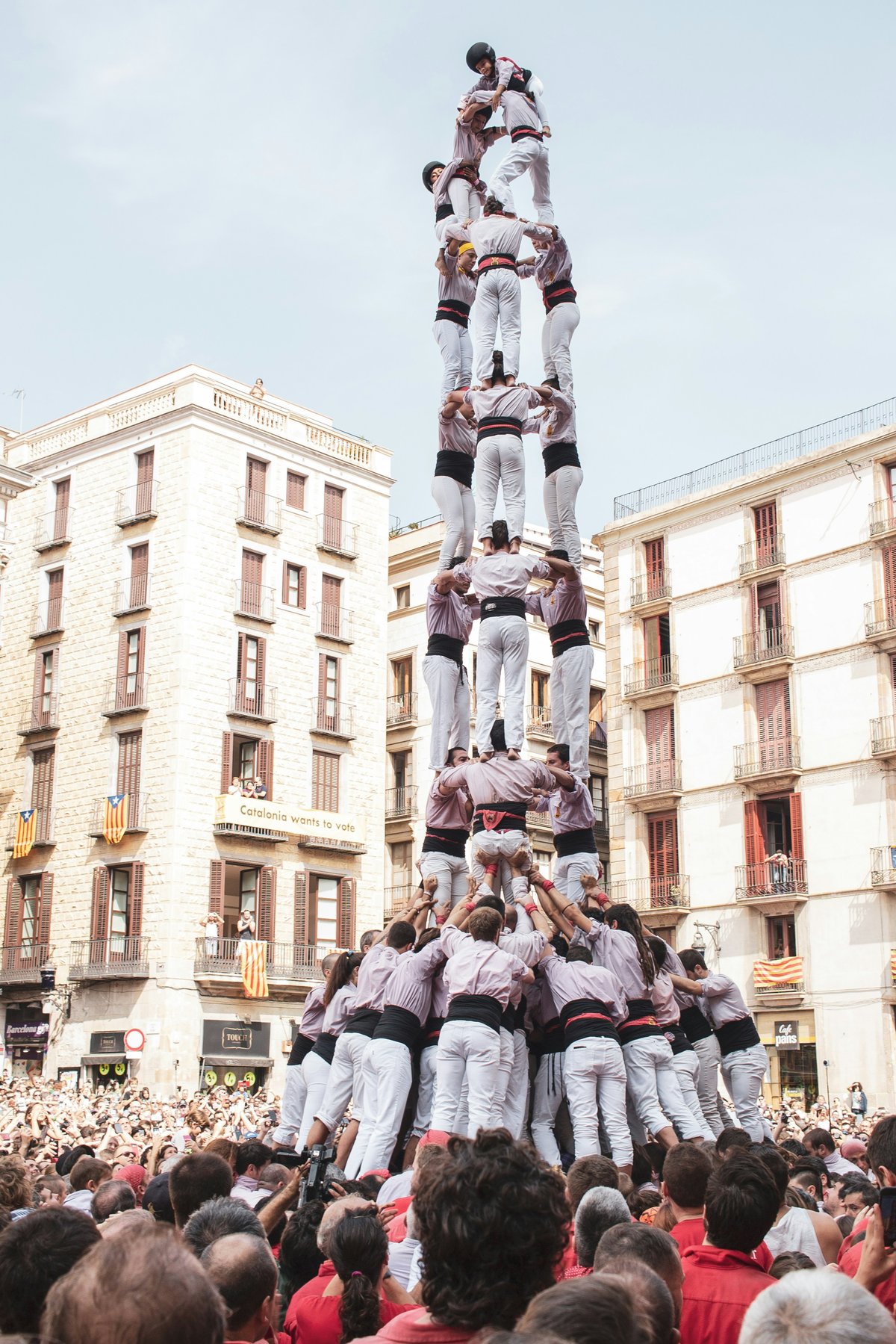
To make sense of the language situation and avoid missteps, it helps to understand a little of the deeper context. Catalonia has its own language, history, traditions, and a strong sense of national identity distinct from the rest of Spain — and that identity was actively suppressed under the Franco dictatorship (1939–1975), when Catalan was banned from public life, schools, and media. The post-Franco revival of the language and culture is therefore a point of profound pride and, for many, a matter of hard-won freedom, which is why treating Catalan as just a quirky version of Spanish can land badly. You may also encounter signs of the Catalan independence movement — the estelada (the independence flag with a star), yellow ribbons, and strong political feelings on the question of whether Catalonia should be a separate state from Spain. As a visitor, the right posture is simple: you don't need to take a side or even discuss it, but be aware it's a live, emotional issue, and show baseline respect for the local language and culture. None of this should make you anxious — Barcelonans are welcoming and you'll rarely need to navigate the politics directly — but understanding that Catalan identity is real, important, and historically charged turns a potential faux pas into a sign that you actually see the place you're visiting.
Practical etiquette quick hits
Greet when entering small shops — a "hola"/"bon dia" on entering and "adéu"/"gràcies" on leaving is polite.
Ask before photographing people, especially in markets and residential areas.
Learn the meal clock and don't expect US hours.
Carry the church-modesty layer for religious sites.
A little language effort — even just greetings and thank-yous — transforms interactions.
Be patient and unhurried — the relaxed pace is a feature, not a flaw.
FAQ
What language do they speak in Barcelona?
Both Catalan and Spanish. Catalan is the native language of Catalonia and central to local identity — it's a distinct language, not a dialect of Spanish. Everyone also speaks Spanish, and English is widely understood in tourist areas, so you'll get by easily.
Do I need to speak Catalan in Barcelona?
No — Spanish is universally understood and English is widely spoken in tourist contexts. But Catalan matters to locals' identity, so a few words (like "bon dia" for good morning) are warmly received, and you should never dismiss Catalan as a mere dialect.
What are the main cultural differences for Americans?
The late meal and nightlife schedule (lunch at 2, dinner at 9), a slower unhurried pace, modest tipping, neater dress than typical US tourist attire, and a real local sensitivity around over-tourism that rewards being a considerate guest.
How much should I tip in Barcelona?
Modestly — there's no US-style percentage expectation. Round up the bill or leave small change for good service in restaurants; tipping is appreciated but not obligatory (see our money and tipping guide for details).
How can I be a respectful tourist in Barcelona?
Support local businesses, keep noise down in residential neighborhoods, respect Catalan culture and language, dress neatly, learn a few local phrases, and don't treat where people live as a theme park. The city's tension is with thoughtless mass tourism, not considerate visitors.
Keep planning
Not sure how the slots fit together?
Pick your trip length and we'll route a real day-by-day plan around the timed entries.